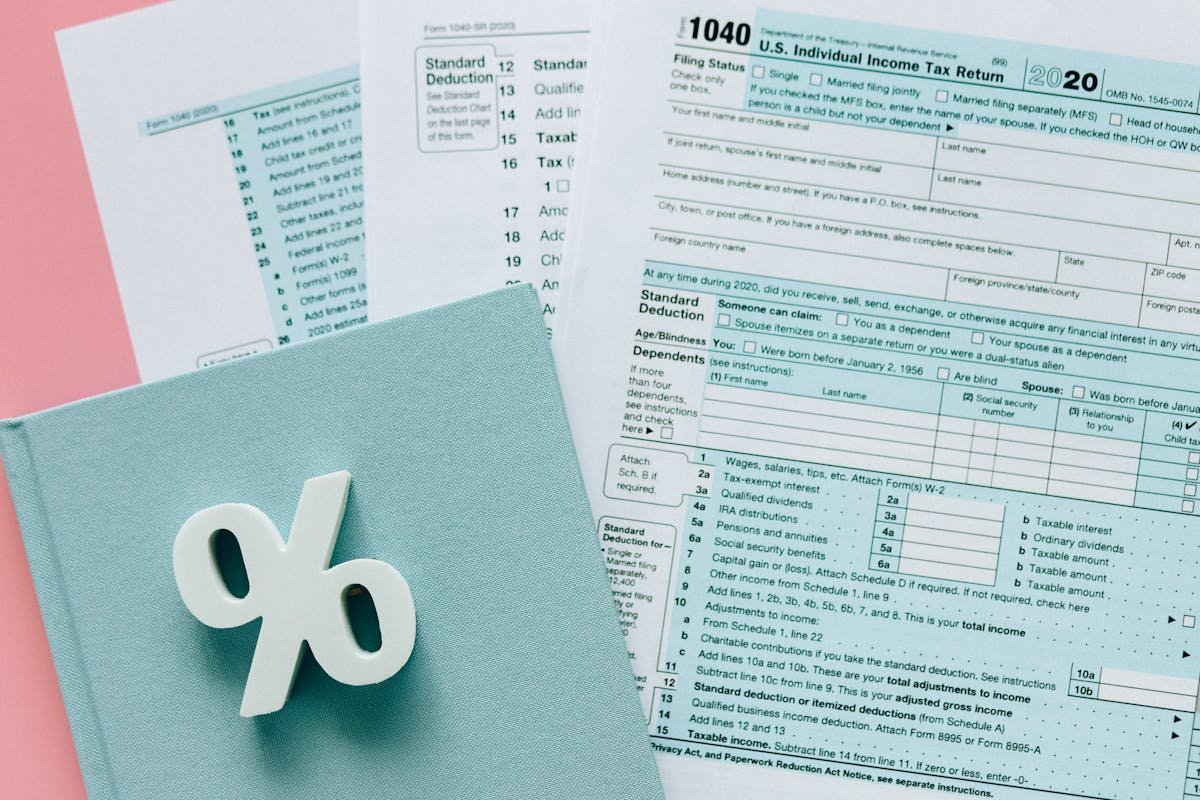
5 Tax Mistakes I Made as a First-Time Filer — And the One That Cost Me $2,300
Nobody teaches you how to do taxes. Not in high school. Not in college. You just turn 22, get a W-2, and suddenly you are expected to figure out a system that confuses actual accountants.
I filed my first tax return in 2019. I used TurboTax, clicked through everything as fast as possible, and felt proud that I "did my taxes." I had no idea I was leaving money on the table.
Over the next four years, I made five mistakes that collectively cost me somewhere around $4,100 in refunds I never got. One single mistake was responsible for $2,300 of that. Here is every embarrassing detail.
Mistake 1: I Used the Standard Deduction When I Should Have Itemized (Cost: ~$800)
In 2020, I moved for a new job. I paid $3,200 in moving expenses, donated about $2,000 worth of furniture to Goodwill, and had $4,100 in student loan interest. My total deductible expenses were well over $12,000 — but the standard deduction that year was $12,550.
"Close enough," I thought. "Standard deduction is easier."
What I did not realize: some of those deductions could be taken on top of the standard deduction. Student loan interest, for example, is an "above-the-line" deduction. I could have taken the standard deduction AND deducted my student loan interest. My tax software asked me about this — I just clicked past it because I did not understand the question.
I called my cousin Angela, who is a CPA in Dallas, about this two years later. She literally sighed into the phone. "Michael, that is the most common mistake I see. People think it is one or the other for everything." Thanks, Angela.
How to avoid this: Learn the difference between "above-the-line" and "below-the-line" deductions. Above-the-line deductions (student loan interest, HSA contributions, educator expenses) can be taken regardless of whether you itemize. Below-the-line deductions (charitable donations, mortgage interest, state taxes) only matter if you itemize. The IRS explains this in Publication 17, though calling it "explains" is generous.
Mistake 2: I Never Adjusted My W-4 After Getting a Raise (Cost: ~$0, But It Hurt)
Okay, this one did not technically cost me money, but it caused a different kind of pain. I got a significant raise in mid-2021 — went from $52,000 to $71,000. Great news, right?
Except I never updated my W-4 at work. My employer was still withholding taxes based on my old salary bracket. Come April 2022, I owed the IRS $1,400. I did not have $1,400 just sitting around. I had to set up a payment plan, which meant interest charges.
The IRS charges about 8% interest on unpaid taxes as of 2026. Not credit-card-level bad, but still — it is money you are throwing away because you did not fill out a one-page form at HR.
How to avoid this: Any time your income changes significantly (raise, new job, side income, marriage), use the IRS Tax Withholding Estimator and update your W-4. Takes ten minutes. I set a reminder to check mine every January now.
Mistake 3: I Ignored My Side Hustle Income Until the IRS Didn't (Cost: ~$600 in Penalties)
In 2022, I started doing freelance graphic design on the side. Made about $8,500 that year. Not life-changing money, but not nothing.
I did not report it. Not because I was trying to commit tax fraud — I genuinely did not know I had to. Nobody sent me a W-2 for it, so I assumed it did not count. I know, I know.
Here is what I did not understand: if you earn more than $600 from a single client, they send a 1099-NEC to both you AND the IRS. The IRS already knew about $6,200 of my side income before I even opened TurboTax. When my return did not include it, I got a lovely letter six months later with a bill for back taxes plus a 20% accuracy penalty.
Total damage: about $600 in penalties and interest on top of the taxes I already owed.
How to avoid this: Report all income. Period. Even if you do not get a 1099, you are legally required to report it. If you make more than $400 in self-employment income, you also owe self-employment tax (15.3% for Social Security and Medicare). The IRS has a whole section on self-employment taxes. Read it before you get the letter.
Mistake 4: I Didn't Know What a Saver's Credit Was (Cost: $2,300 Over 3 Years)
This is the big one. The one that makes me want to go back in time and shake 23-year-old me.
The Saver's Credit (officially the "Retirement Savings Contributions Credit") gives you a tax credit — not a deduction, a credit, which is worth way more — for contributing to a retirement account. If your adjusted gross income is below certain thresholds ($38,250 for single filers in 2026), you can get a credit worth up to 50% of your contributions, maxing out at $1,000 per year.
I had been contributing to my 401(k) since I started working. I qualified for three consecutive years. I never claimed it. Not once. Because I did not know it existed.
$2,300 in tax credits. Gone. Just... gone. My tax software probably asked about it and I clicked "Skip." (TurboTax, if you are reading this — maybe make that screen bigger? Or red? Or play an air horn?)
How to avoid this: If your income is below $38,250 (single) or $76,500 (married filing jointly) in 2026, and you contribute to a 401(k), IRA, or similar retirement account, you likely qualify. File Form 8880 with your return. It takes five minutes and could be worth $1,000. The IRS literally wants to give you money for saving. Take it.
Mistake 5: I Paid Full Price for Tax Software (Cost: ~$400 Over 4 Years)
This one is less about taxes and more about me being bad at spending money. I paid $89-119/year for TurboTax Deluxe for four years straight.
What I should have done: used the IRS Free File program. If your AGI is below $84,000 (which mine was for the first three years), you can file federal taxes for free through IRS-approved software. Not some sketchy knockoff — actual tax software, for free, because the IRS mandates it.
Or I could have used Cash App Taxes (formerly Credit Karma Tax), which is completely free for both federal and state returns regardless of income. No upsells. No "upgrade to unlock this form." Just... free.
Look, I am not going to sit here and tell you to never use TurboTax. If you have a complex return with business income, rental properties, and stock options, paid software might be worth it. But if you are a W-2 employee with a standard return? You are paying $100+ for something you can get for free. And TurboTax knows this — their entire business model depends on you not knowing about the free alternatives.
(I realize recommending against paid tax software on a finance blog is like a restaurant telling you to eat at home. But honestly? For most people under 30 with simple returns, free is the right call.)
How to avoid this: Check IRS Free File first. If your AGI is under $84,000, use one of their partner products. If it is above that, IRS Free File Fillable Forms is free for everyone — it just does not hold your hand as much.
The Bottom Line
I am not an accountant. I am a guy who screwed up his taxes for four years and finally learned from it. The tax code is genuinely confusing — the Internal Revenue Code is over 6,800 pages long, and the regulations interpreting it add another 70,000+ pages. Nobody is expected to know all of it.
But you should know the basics. And "the basics" can save you thousands of dollars. $4,100 in my case. That is a vacation. That is three months of car payments. That is money I earned and the government was willing to let me keep — I just did not know how to ask.
Disclaimer: This article is for informational purposes only and does not constitute tax advice. Tax laws change frequently. Consult a qualified tax professional or CPA for advice specific to your situation. For official guidance, visit IRS.gov.
Found this helpful?
Subscribe to our newsletter for more in-depth reviews and comparisons delivered to your inbox.