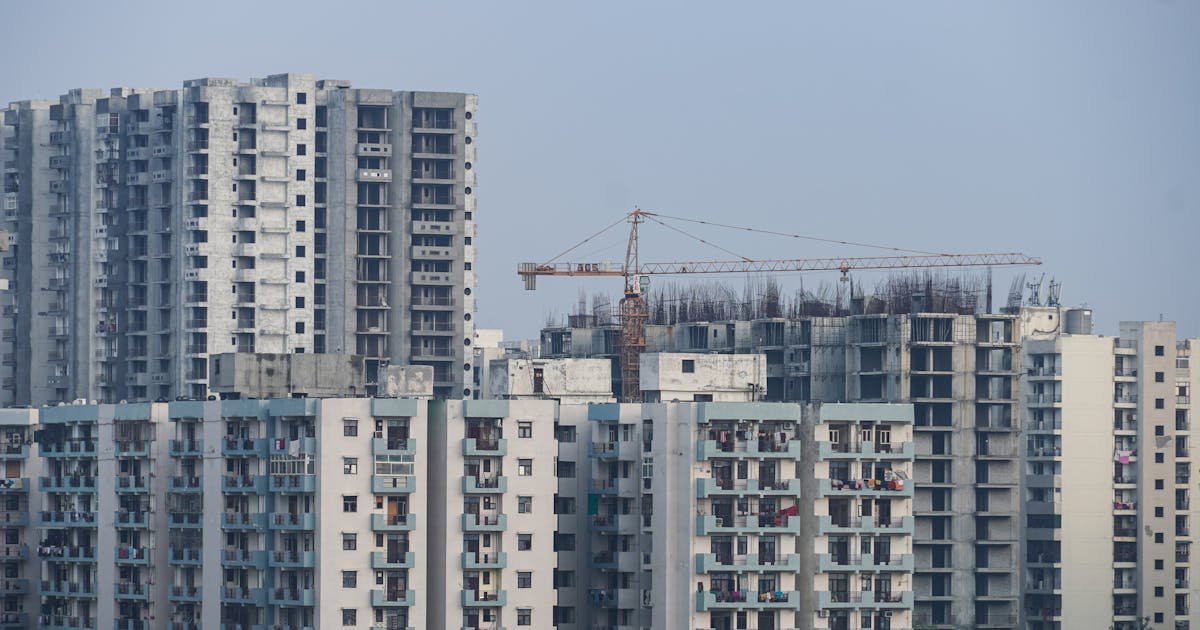
Austin Built 120,000 New Apartments and Rents Crashed 16 Percent — What This Pew Research Study Means for Real Estate Investors Everywhere
I Paid $1,850 a Month for a One-Bedroom in Austin in 2022
I know, I know. That is a lot. But back then, everyone — literally everyone — said Austin was the place to be. Tech companies were relocating. Tesla had just built a Gigafactory. Oracle moved its headquarters. My landlord was raising rent every year and I was just... accepting it, like a hostage with Stockholm syndrome who also pays utilities.
Fast forward to March 2026, and Pew Research just published data that made me do a genuine double-take over my $6.40 morning coffee. Austin's median rent has fallen to $1,296. That is a 16 percent drop from its 2021 peak of $1,546. And for the first time in over a decade, Austin rents are now 4 percent below the national median.
My friend Carlos, who stuck it out in Austin while I relocated to Charlotte in 2023, just signed a new lease. Same neighborhood I was in. Same size unit. $1,310 a month. He sent me a screenshot of the lease with a thumbs-up emoji and nothing else. Savage.
Disclaimer: This article is for informational purposes only and does not constitute financial advice. Real estate markets vary significantly by location. Consult a licensed financial advisor or real estate professional before making investment decisions.
What Pew Actually Found — And It Is a Blueprint, Not an Accident
The Pew Research report published March 18, 2026, is one of those rare studies that tells a complete story. Austin did not get lucky with falling rents. They engineered it through over a decade of deliberate policy changes.
Here are the numbers that matter:
- 120,000 new housing units added from 2015 to 2024 — a 30% increase in total housing stock
- For context, the US overall grew its housing stock by just 9% in the same period
- Median rent dropped from $1,546 (December 2021) to $1,296 (January 2026)
- In buildings with 50+ units, rents fell 7% in a single year (2023 to 2024) — the steepest decline of any major metro
- Class C apartments (older, lower-cost buildings) saw rents drop 11% — benefiting lower-income renters most
- All this happened while Austin's population grew by 18,000 residents from 2022 to 2024
Let that last point sink in. The population grew AND rents fell. The standard excuse for high rents — "too many people, not enough housing" — got demolished by a city that simply chose to build.
How Austin Actually Did It — The Policy Playbook
This was not one magic bullet. It was at least six coordinated policy changes over two decades:
1. Vertical Mixed Use Zoning (VMU) — 2007
Austin created a new zoning category that relaxed requirements for projects meeting quality and eco-friendliness standards. The big incentive: more units per site and 60% reduction in minimum parking requirements. By February 2024, over 17,600 units had been built or were being built in VMU-zoned areas.
2. Strategic Rezoning Near Jobs and Transit
Downtown Austin and neighborhoods near UT Austin got targeted density bonus programs — developers could build taller if they included income-restricted units. Smart, because it concentrates housing where demand is highest.
3. ADU Reform — 2015
Austin relaxed rules on Accessory Dwelling Units (backyard apartments, garage conversions, basement units). This unlocked thousands of additional small housing units without changing neighborhood character dramatically.
4. $250 Million Bond Measure — 2018
Voters approved a quarter-billion dollars for affordable housing construction and repair. Public investment alongside private development.
5. Permitting Reform
Streamlined processes to speed development and reduce costs. In housing, time literally equals money — every month of delay adds thousands in carrying costs that get passed to renters.
6. Parking Requirement Reductions
Reduced or eliminated mandatory parking minimums in transit-accessible areas. This alone can cut construction costs by $30,000-$50,000 per unit (parking structures are absurdly expensive to build).
What This Means If You Own Rental Property
I will be honest: if you own rental property in a market that is about to do what Austin did, this data should make you nervous. Not panic-nervous, but "maybe I should adjust my financial model" nervous.
My college roommate Steve bought a duplex in Austin in 2019 for $380,000, financed it assuming rents would keep climbing at 5-7% annually. His mortgage payment requires $2,800 total from both units. When rents were peaking, he was collecting $3,400. Comfortable margin.
Last month he told me he is getting $2,750 for both units combined. That is less than his mortgage payment. He is subsidizing his tenants. "I thought Austin was a can't-miss market," he said. I did not have the heart to tell him that his thesis — "there aren't enough apartments" — was exactly the problem the city was actively solving.
Cities Most Likely to Follow Austin's Playbook
Here is where investors need to pay attention. According to data from the National Association of Home Builders (NAHB) and recent legislative tracking:
- Minneapolis — Already eliminated single-family zoning citywide in 2019. Building permits are accelerating.
- Oregon (statewide) — Banned single-family-only zoning in all cities over 10,000 population. ADU construction is surging.
- Charlotte, NC — Adopted a comprehensive zoning overhaul (UDO) in 2023 allowing more density. Apartment construction permits are at record highs.
- Denver — Expanded ADU rules and adopted a blueprint for major transit-oriented development. Keep watching.
- Salt Lake City — Significant zoning reform in progress with strong political support.
If you own rental property in any of these markets, the Austin data is your crystal ball. It does not mean rents will crash tomorrow. But it means the structural forces that kept supply low and rents high are being systematically dismantled.
What This Means If You Are a REIT Investor
Publicly traded apartment REITs have had a wild ride. The FTSE Nareit All Apartment REITs Index returned about 6.2% in 2025 — decent but below the broader REIT index. And the Austin data should be a flashing warning sign for investors in Sun Belt-heavy portfolios.
Think about the major apartment REITs and their Austin exposure:
- Camden Property Trust (CPT) — Headquartered in Houston, significant Austin portfolio. Total return has underperformed the Apartment REIT index by 340 basis points in the last 12 months.
- NexPoint Residential Trust (NXRT) — Heavy Sun Belt concentration including Texas. Same story.
- BSR REIT (HOM.U) — Texas-focused. Has been quietly reducing Austin exposure.
Meanwhile, REITs focused on supply-constrained coastal markets — where NIMBYism still blocks development — have held up better. AvalonBay (AVB) and Equity Residential (EQR), with heavy Northeast and California portfolios, have outperformed Sun Belt peers.
The lesson is not "never invest in Sun Belt REITs." It is: pay attention to local housing policy. Just like how Nasdaq rewriting its index rules forced investors to rethink passive investing, housing policy changes force you to rethink real estate assumptions. A market where 120,000 new units just dropped is structurally different from a market where the zoning board blocks every project over three stories.
What This Means If You Are Looking for a Place to Live
Okay, non-investor angle time, because not everyone reading this owns a duplex or a REIT portfolio. Some of you are just trying to find an apartment that does not require selling a kidney.
The Austin data suggests something genuinely hopeful: building more housing actually lowers rents. That sounds obvious, but in American housing policy, it has been a hotly contested claim for decades. NIMBYs argued that new luxury apartments would raise surrounding rents through "induced demand" or neighborhood "upscaling."
The Pew data kills that argument. Austin built market-rate AND affordable housing, and rents fell across the board — including an 11% drop in Class C apartments that serve lower-income renters. The new supply benefited everyone, not just people who could afford luxury units. (For more on how regulatory changes reshape markets, see our analysis of the SEC's plan to kill quarterly earnings reports.)
If you are considering relocating:
- Austin is now genuinely affordable by major metro standards. $1,296 median rent with a strong job market? That is attractive.
- Watch for similar dynamics in Minneapolis, Portland (Oregon), and Charlotte over the next 2-3 years.
- Avoid markets with strong anti-development sentiment — San Francisco, most of coastal California, and parts of the Northeast will remain expensive because they refuse to build.
The 587-Comment Hacker News Debate That Summarizes Everything
This Pew report hit the front page of Hacker News on March 18 and generated 587 comments (and counting). I read about 200 of them. The debate essentially breaks into two camps:
Camp A: "See? Supply and demand works. Build more housing and rents fall. It is not complicated."
Camp B: "Austin is a special case. Not every city can add 30% to its housing stock in nine years. Zoning reform requires political will that most cities lack."
Both camps have valid points. But the data is unambiguous: Austin's approach worked, and the cities most willing to replicate it will likely see similar results. The ones that refuse will keep watching rents climb while their residents move to places that actually build things.
As one commenter put it: "The best time to reform zoning was 20 years ago. The second best time is now."
Carlos texted me again yesterday. "You should move back," he said. "Rent is cheap, tacos are still incredible, and there is a brand new apartment complex on South Congress with a pool AND a dog park."
I am... actually thinking about it.
If the Austin story has you thinking about your tax situation as a renter or landlord, do not miss our complete 2026 tax playbook for solo income. And for businesses navigating the digital economy, wardigi.com helps companies build their online presence from the ground up.
Disclaimer: This article is for informational and educational purposes only. It does not constitute financial, investment, or real estate advice. Past performance of real estate markets does not guarantee future results. Always consult with a qualified financial advisor before making investment decisions. Sources: Pew Research Center, FTSE Nareit REIT Index Data, National Association of Home Builders (NAHB), IBM Cost of a Data Breach Report 2025, SEC filings for referenced REITs.
Found this helpful?
Subscribe to our newsletter for more in-depth reviews and comparisons delivered to your inbox.