I Tried Living on a Cash-Only Budget for 60 Days — Here Is What Happened to My Spending Habits
On January 2nd, 2026, I did something that my friends called "unhinged" and my financial advisor called "actually kind of brilliant": I cut up my debit card, deleted Apple Pay, and committed to spending nothing but physical cash for 60 days.
Let me back up. I am not a financial disaster. I have a decent job, a reasonable emergency fund, and no credit card debt. But I had noticed something uncomfortable in my year-end spending review: I could not account for roughly $4,200 in discretionary spending. Not bills. Not rent. Not groceries. Just... stuff. Stuff I bought because tapping a phone on a terminal does not feel like spending money.
Behavioral economists have a name for this. It is called the "pain of paying," and research from MIT has shown that people spend 12-18% more when using cards compared to cash. When you hand over physical bills, your brain processes it as a loss. When you tap a phone, your brain processes it as "beep, moving on."
So I decided to make every purchase hurt a little. Here is what 60 days of cash-only living taught me.
The Rules
Before I started, I set clear rules. Because if I know one thing about myself, it is that Future Me will find every possible loophole if Present Me does not close them.
- All discretionary spending must be cash. Groceries, eating out, shopping, entertainment — cash only.
- Fixed bills can stay digital. Rent, utilities, insurance, subscriptions. These are autopaid and I cannot hand my landlord a wad of twenties. Well, I could, but it would be weird.
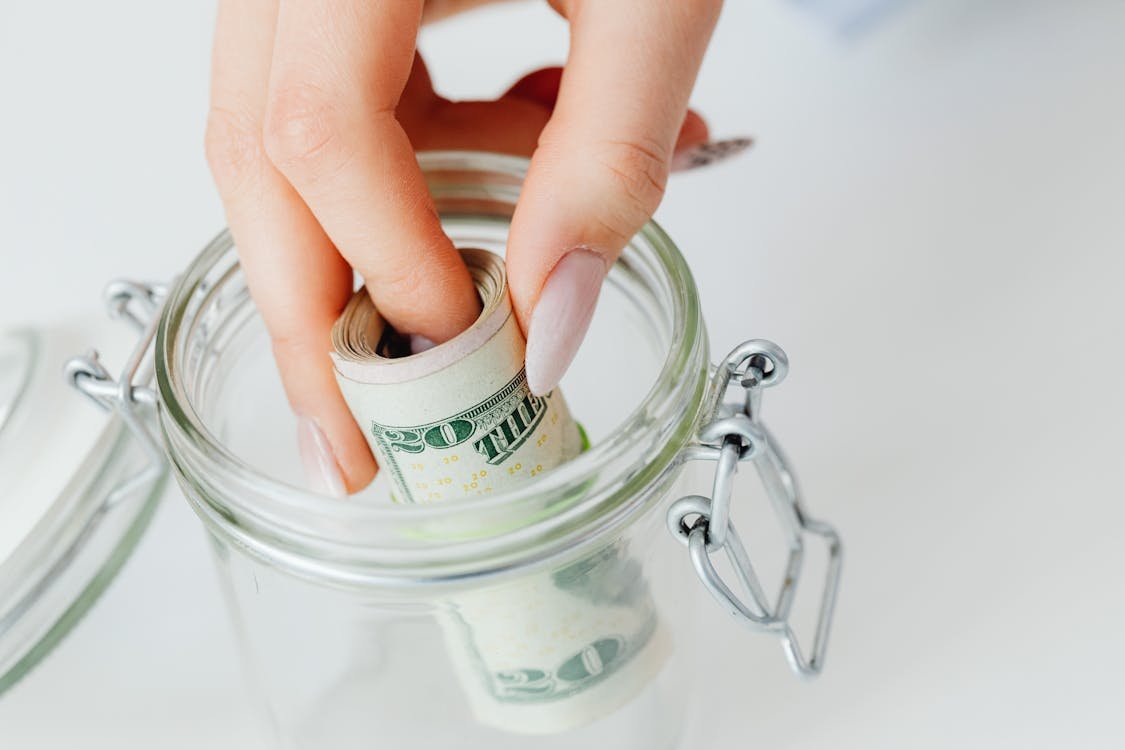
- Weekly cash envelope: $200. That is my entire discretionary budget for the week. When it is gone, it is gone.
- No borrowing from next week. This rule got tested hard in week three.
- Track every purchase in a notebook. Old school. Physical notebook. No app.
My weekly budget of $200 was based on my average discretionary spending of about $290/week from the previous year. So I was already cutting roughly 31% before the experiment even started. The cash constraint was layered on top of that.
Week 1: The ATM Problem
The first surprise? Getting cash is annoying. I have not regularly visited an ATM since maybe 2019. I had to Google where the nearest one was. It was at a bank branch seven minutes from my apartment that I drive past every day and have never noticed.
I withdrew $200 in twenties and immediately realized I had another problem: change. My first purchase was a $4.50 coffee and I handed over a twenty. The barista gave me a look that said "seriously?" and counted out $15.50 in mixed bills and coins.
By day three, my wallet weighed approximately four pounds and jingled when I walked. I started carrying a separate coin pouch. My friend Marcus, who has apparently never heard of tact, said I looked like "a Victorian gentleman going to market."
Week 1 spending: $163. Already under budget. But it was early.
Week 2: The Pain Kicks In
This is when I started feeling it. Research from the Journal of Consumer Research suggests that the "pain of paying" with cash is most acute for purchases between $20-50 — big enough to feel, small enough that you would not think twice with a card.
And they were right. On Tuesday, I was about to buy a $35 shirt at Target. I pulled out two twenties, looked at them, and thought: "Do I actually want this shirt, or do I just want to buy something?" I put the shirt back.
That thought — "do I actually want this?" — started happening multiple times a day. It is the thought that digital payments are specifically designed to suppress. Tap and go. Do not think. Do not feel. Just consume.
With cash, every transaction is a tiny negotiation with yourself. Is this coffee worth five of these dollar bills? Is this lunch worth fifteen? You make the decision consciously instead of reflexively. And it turns out, when you make spending decisions consciously, you make fewer of them.
Week 2 spending: $141. I was shocked. I did not feel deprived. I ate well. I went out. I just... skipped the stuff I did not actually want.
Week 3: The Hard Week
A friend's birthday. A spontaneous dinner invitation. An Uber ride when my car was in the shop (wait, Uber does not take cash — this was the first rule conflict).
The Uber situation forced me to break my own rule. I could not reasonably walk eight miles to work. So I allowed one digital exception for transportation emergencies and added a $15 "penalty" to my next week's cash withdrawal. Harsh? Maybe. But rules without consequences are just suggestions.
The birthday dinner was harder. I budgeted $50 for my share plus a gift. It cost $67. I dipped into the next week's envelope for $17, which meant week four started with only $183.
According to financial psychologist Dr. Brad Klontz, one of the biggest predictors of budget failure is social spending — purchases driven by social situations rather than individual desire. He is written about this extensively in his research published through the Financial Planning Association. My week three was a textbook example.
Week 3 spending: $189. Over budget, but still less than my old average of $290.
Week 4: Adaptation
Something shifted in week four. I stopped thinking about cash as a constraint and started thinking about it as information. Every time I opened my wallet, I could literally see how much money I had left. Not a number on a screen. Physical bills. Visible. Countable. Finite.
This visibility changed my behavior in ways I did not expect:
- I started meal prepping on Sundays. Not because I read a productivity blog, but because I could see that eating out twice during the week would eat 40% of my remaining cash.
- I brought coffee from home. Not because I am disciplined (I am not), but because spending $5 on coffee means visibly watching your wallet get thinner.
- I started saying no to impulse purchases instantly. No deliberation needed. If it was not on my mental shopping list, the cash stayed in my wallet.
The Bureau of Labor Statistics reports that the average American household spends about $3,458/year on food away from home. My eating-out spending in weeks 4-8 dropped to roughly $35/week. Annualized, that would be $1,820 — a 47% reduction. And I did not miss a single meal I actually wanted.
Week 4 spending: $128. My lowest week.
Weeks 5-8: The New Normal
By week five, cash-only living felt normal. Not easy — normal. The annoying parts (ATM visits, making change, restaurants that look at you funny when you pay with bills) became routine. The benefits became obvious.
Here are my weekly totals:
- Week 5: $147
- Week 6: $156
- Week 7: $139
- Week 8: $152
Average across all 8 weeks: $152/week. Down from my pre-experiment average of $290/week. That is a 48% reduction in discretionary spending.
Let me say that again. I cut my discretionary spending nearly in half. Not by depriving myself. Not by extreme couponing. Not by living on rice and beans. Just by making every purchase physical, visible, and slightly inconvenient.
The Final Numbers
Total discretionary spending, 60 days: $1,215
Pre-experiment average for same period would have been: ~$2,320
Total saved: ~$1,105
Over a full year, if I maintained this level of spending reduction, that projects to roughly $7,176 in savings. That is a vacation. That is a significant chunk of an emergency fund. That is two years of a Roth IRA maximum contribution if you are under 50 (the IRS sets the 2026 limit at $7,000 for individual contributors under 50, per Internal Revenue Code Section 408A).
All from paying with paper instead of plastic.
What I Learned That No Study Prepared Me For
Cash Changes Your Relationship With Small Purchases
The $3-7 range is where the magic happens. A latte here, a snack there, an impulse app purchase — these "micro-transactions" are invisible with digital payments. According to analysis from financial data firm Ramsey Solutions, the average American spends over $160/month on impulse purchases. With cash, I watched mine drop to about $40/month because each one required a conscious decision.
You Discover Your Actual Needs vs. Wants
I thought I needed my daily cold brew. Turns out I need caffeine — the $5 coffee shop experience was a want. I thought I needed new clothes monthly. Turns out I was buying clothes out of boredom, not necessity. Cash does not judge you, but it does force honesty.
Some Things Are Genuinely Worth the Splurge
I still spent $45 on a nice dinner with my partner in week six. I still bought a $22 book I had been wanting. The difference is that these felt like deliberate choices, not unconscious habits. That dinner was more enjoyable because I chose it with intention, not autopilot.
Would I Recommend This?
Yes, but with caveats.
If you are someone who feels like money "disappears" every month and you cannot figure out where it goes — try two weeks of cash-only. Not 60 days. Just two weeks. It will show you exactly where your money goes because you will physically hand it over and write it down.
If you have significant debt, the Consumer Financial Protection Bureau (CFPB) recommends prioritizing a structured repayment plan over cash-only experiments. The cash method can complement a debt strategy, but it is not a substitute for one.
Am I still living cash-only? No. After 60 days, I went back to digital payments — but with a critical difference. I now set a weekly "spending allowance" transfer to a separate debit card, and when it is empty, I stop. The principle is the same: visible limits, conscious spending. I just swapped paper for a digital envelope.
My spending has settled at about $185/week. Higher than my cash-only period, but still 36% below my pre-experiment average. The habits stuck, even when the cash did not.
This article is for informational and entertainment purposes only and does not constitute financial advice. Individual results may vary significantly based on income, location, existing spending habits, and financial obligations. Consult a qualified financial advisor before making significant changes to your financial strategy.
📚 Related reading:
- The 50/30/20 Budget Rule: I Followed It for 6 Months and Here's What Actually Happened to My Bank Account
- Best Budgeting Apps 2026: I Tracked Every Dollar for 90 Days Across 8 Apps to Find the Winner
- How Much Should You Really Have in Your Emergency Fund? A Financial Planner Changed My Mind About the "3-6 Months" Rule
Found this helpful?
Subscribe to our newsletter for more in-depth reviews and comparisons delivered to your inbox.