I Owed the IRS $1,847 in Estimated Tax Penalties Last Year Because I Did Not Understand One Stupid Rule — Here Is the Exact Quarterly Payment Schedule Every Freelancer Needs for 2026
Let me tell you about the most expensive math mistake of my career. April 2025. I am sitting in Jennifer Kowalski's office — she is a CPA in Portland who charges $275 an hour and somehow still has a waiting list — and she is showing me a number on her screen: $1,847.23. That was my underpayment penalty for 2024. Not because I had not paid taxes. I HAD paid taxes. I just paid them... wrong.
Specifically, I paid one giant lump sum in January instead of four quarterly payments. The IRS does not care that you eventually paid everything you owed. They care WHEN you paid it. It is like a library fine for a book you returned — yes, it is back on the shelf, but you still owe $1,847.23 for being late. Except the library is the federal government and they are not interested in hearing about your cash flow problems.
What Is the Estimated Tax Penalty and Who Actually Has to Pay It?
The estimated tax penalty (technically called the "underpayment of estimated tax penalty" under IRC Section 6654) applies to anyone who owes $1,000 or more in federal taxes after subtracting withholding and credits, AND did not pay at least 90% of their current year tax liability through quarterly estimated payments or withholding. There is a safe harbor exception: if you paid at least 100% of LAST year's tax liability through quarterly payments (110% if your AGI exceeded $150,000), you owe zero penalty. If your income is that high, you should also explore a backdoor Roth IRA strategy to maximize tax-advantaged retirement savings. But back to penalties — you owe zero regardless of how much your income grew.
That safe harbor rule? That is the one rule I did not understand. And it cost me $1,847.23.
For 2026, the quarterly estimated tax deadlines are:
- Q1: April 15, 2026 (covers January 1 – March 31 income)
- Q2: June 15, 2026 (covers April 1 – May 31 income — yes, only two months, the IRS hates symmetry)
- Q3: September 15, 2026 (covers June 1 – August 31 income)
- Q4: January 15, 2027 (covers September 1 – December 31 income)
Miss any of these by even a single day and the penalty meter starts ticking at the current IRS interest rate, which as of March 2026 sits at 7% annually, compounded daily. For context, that rate was 3% in 2021. Thanks, inflation.
How Much Does the Estimated Tax Penalty Actually Cost?
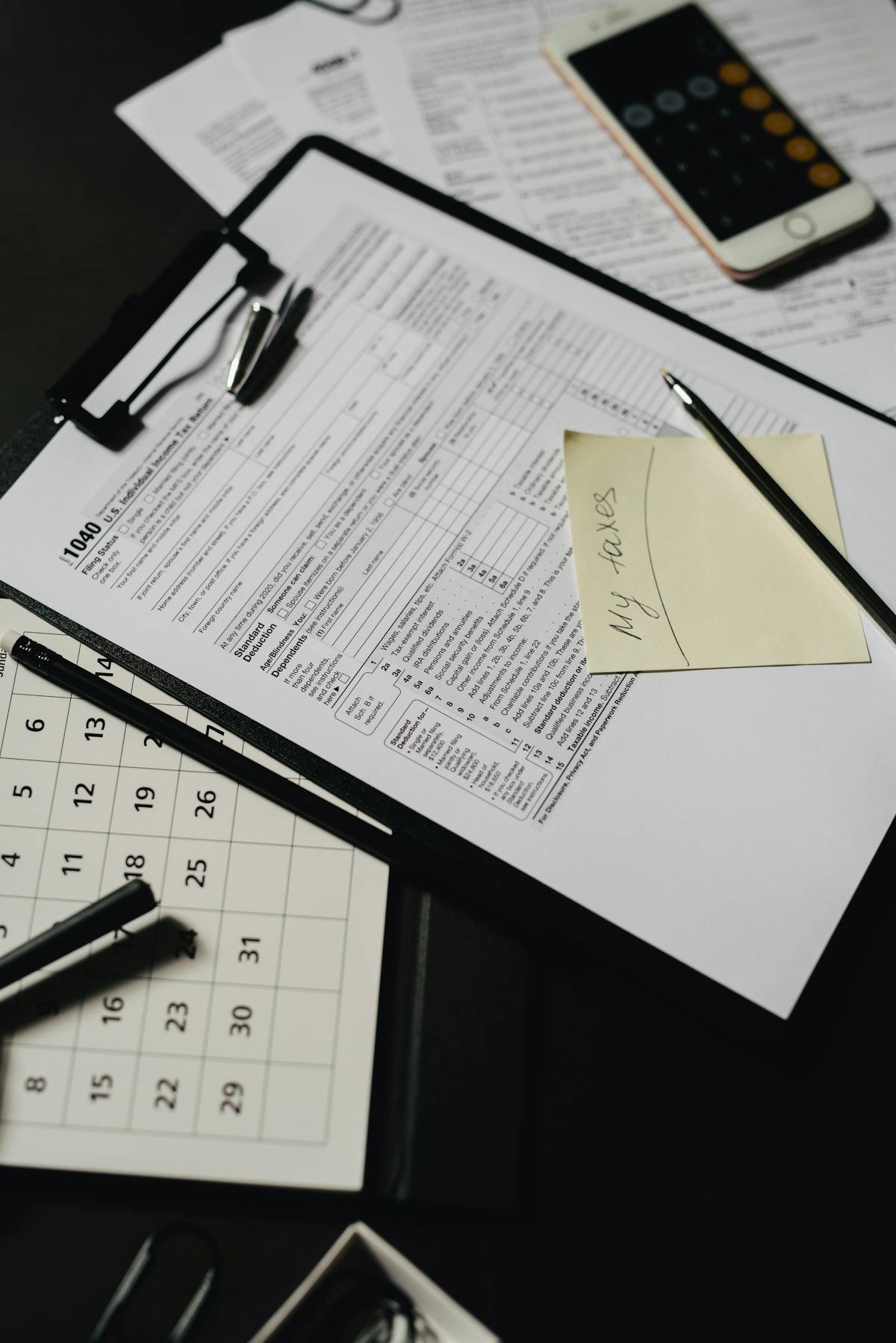
The IRS calculates the penalty using Form 2210, and honestly the math is a headache wrapped in a migraine. But here is a rough approximation: if you underpay by $10,000 for one quarter, your penalty is approximately $10,000 × 7% × (90 days / 365 days) = $172.60. Per quarter. Stack four quarters of underpayment and you are looking at $690 in penalties on a $10,000 shortfall.
My freelancer friend Raj Patel — he does UX design for enterprise clients, bills around $180K/year — got hit with a $2,340 penalty in 2024 because he had one monster Q3 and didn't adjust his quarterly payments. "I thought estimated taxes were just... estimates," he told me. "Like, an estimate. A rough guess. Apparently the IRS has a very different definition of that word."
Does the Safe Harbor Rule Actually Protect You From All Penalties?
Yes. If you paid at least 100% of your prior year's total tax liability through four equal quarterly payments (or 110% if your AGI was above $150,000), the IRS cannot charge you a penalty. Period. Even if your income doubled. Even if you owe $50,000 on April 15. The safe harbor protects you completely from underpayment penalties.
This is the rule that would have saved me $1,847.23. My 2023 total tax was $34,200. If I had paid $8,550 per quarter throughout 2024 ($34,200 ÷ 4), I would have owed zero penalty even though my 2024 income jumped 40%.
Instead, I paid nothing quarterly and sent one check in January. The IRS saw four quarters of zero payments followed by a lump sum. Penalty city.
For 2026, here is exactly what to do: take your 2025 total tax (line 24 on your 1040), divide by four, and set up four automatic payments through IRS Direct Pay or EFTPS. If your AGI was over $150K, multiply your 2025 total tax by 1.1 first, then divide by four. Done. Penalty-proof.
What If Your Income Is Wildly Unpredictable?
The annualized income installment method (Form 2210, Schedule AI) exists for exactly this scenario. Instead of paying equal quarterly amounts, you calculate your actual income earned in each period and pay tax on that specific amount.
This method is genuinely useful if you are a freelancer whose income arrives in unpredictable waves — say, you earn $80K in Q1 from a massive project and then $12K each remaining quarter. Without annualization, you would be required to pay 25% of your annual tax estimate each quarter. With it, you pay proportionally to what you actually earned in each period.
The downside: the math is absolutely brutal. I have watched Jennifer Kowalski — a woman who literally does tax math for fun — squint at Schedule AI like she was reading hieroglyphics. If your income fluctuates by more than 40% quarter-to-quarter, hire a CPA. It will cost you $300-500 for the form preparation and save you thousands in penalties.
Three Free Tools for Tracking Quarterly Estimated Taxes
1. IRS Direct Pay (directpay.irs.gov) — Free. No registration required. You can schedule payments up to 365 days in advance. I set up all four quarterly payments on January 2 every year and then forget about it. That forgetting part is critical because I am the kind of person who "forgets" to pay the IRS $1,847.23.
2. EFTPS (Electronic Federal Tax Payment System) — Free but requires registration (takes 5-7 business days to get your PIN by mail, because apparently the IRS still believes in postal mail). Advantage over Direct Pay: you can schedule recurring payments and view payment history going back four years.
3. Keeper Tax (keepertax.com) — Free for expense tracking and estimated tax calculation. It connects to your bank account and automatically categorizes deductible expenses. The estimated tax calculator updates in real-time as your income changes. I started using it in September 2025 after a recommendation from the r/freelance subreddit. If you are still figuring out Roth IRA rules for 2026, Keeper also helps you estimate how much to shelter in retirement accounts and genuinely wish I had found it three years earlier.
The $3,200 Mistake Most New Freelancers Make
According to the National Association for the Self-Employed's 2025 survey, 67% of first-year freelancers do not make any quarterly estimated tax payments. Not because they are trying to dodge taxes — because nobody told them they had to. The average first-year underpayment penalty was $3,200.
Here is the thing: when you had a W-2 job, your employer withheld taxes from every paycheck automatically. You never thought about it. The money vanished before you saw it. Freelancing removes that guardrail. If you are building a digital business, having proper business infrastructure from day one includes financial infrastructure too. Suddenly YOU are responsible for calculating and sending tax payments four times a year, and the IRS assumes you know this because... well, because they assume a lot of things.
If you just left a full-time job and started freelancing in 2026, do this RIGHT NOW:
- Look at your last W-2 (box 2: federal income tax withheld)
- Estimate your 2026 freelance income
- Use IRS Form 1040-ES worksheet to calculate your quarterly payment
- Set up four automatic payments via IRS Direct Pay
- Add 15% buffer because you will probably earn more than you think
April 15 is 17 days away. Your first quarterly payment is due — and if you have not maxed out your IRA contributions before the deadline, that is another opportunity you are leaving on the table. Do not be me in Jennifer Kowalski's office staring at a $1,847.23 penalty wondering where your financial literacy went.
Financial Disclaimer: This article is based on personal experience and general IRS guidelines as of March 2026. Tax situations vary by individual. Consult a qualified CPA or tax attorney for advice specific to your circumstances. IRS publications 505 (Tax Withholding and Estimated Tax) and Form 1040-ES contain the official rules and worksheets. Federal tax penalty rates are set quarterly by the IRS and are subject to change.
Found this helpful?
Subscribe to our newsletter for more in-depth reviews and comparisons delivered to your inbox.
Related Articles